DEEPBEAT

What is DeepBEAT?

A cutting-edge research project developing innovative exploration methods to detect deep-seated ore deposits on land — with minimal disruption for environment and local communities.

The Challenge

Valuable mineral deposits hidden deep underground can leave tiny chemical clues at the surface, but these clues are often weak, altered or difficult to recognise. DeepBEAT aims to make these hidden signals easier to detect by combining smart sampling, advanced geochemical tools, 3D modelling and AI-based analysis.

Read moreShow less

Deep-seated ore deposits are often difficult to detect because the chemical signals they leave at the surface can be very faint, altered or hidden by natural background variation. Traditional exploration methods may therefore miss important clues, especially when deposits are located far below the surface.

DeepBEAT addresses this challenge by testing how different surface materials — including plants, mushrooms, stream sediments and soils — can help reveal hidden signals from deep mineral systems. The project compares which materials work best in different geological and ecological settings, and how they can be used more effectively in mineral exploration.

To improve detection, DeepBEAT combines portable and laboratory-based geochemical tools with smart sampling strategies. These strategies are guided by existing geological, ecological and geochemical knowledge, helping researchers choose the most promising sampling locations and the most suitable analytical methods.

The collected surface geochemical data are then integrated with 3D geological models and AI-based prospectivity mapping. This helps researchers better understand where hidden ore deposits may be located and improves the prediction of critical raw material resources beneath the surface.

Surface indicators: Plants, mushrooms, stream sediments, and soils are tested as fit-for-purpose material.

Informed sampling & analytical strategies: Geological, ecological, and geochemical prior knowledge is used to target efficient sampling locations and optimize the selection of analytical tools for mineral exploration.

Optimal ecological and geological environments for detection: Understanding which set of conditions improve exploration efficiency.

AI-Powered 3D prospectivity modelling: Surface geochemical data are processed with AI-driven techniques to generate regional 3D models, improving probability of mineral deposit predictions.
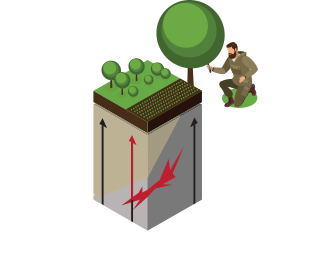
DeepBEAT methodology diagram

Key Research Questions

How deep can ore deposits be traced?

Can handheld devices detect signals from the depths and be used to develop a sampling strategy?

What's the potential of high-resolution laboratory analysis regarding surficial geochemistry for detecting deep deposits?

Project Timeline

Project Timeline 2024–2027

Test Sites

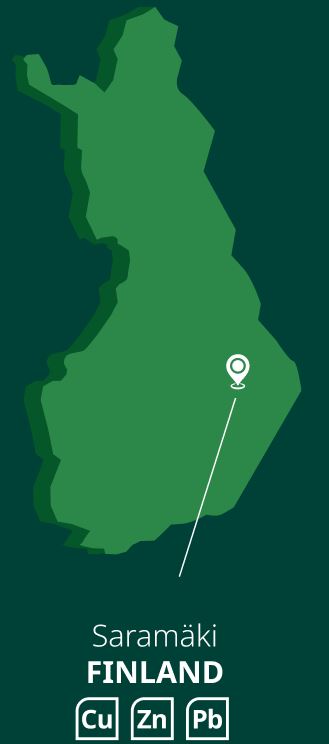
Saramäki, Finland

Outokumpu region, Finland

Saramäki

Saramäki is a unique test site in eastern Finland where ancient ocean-floor rocks have helped bring valuable metals such as cobalt and nickel close to the surface. By studying this site, researchers can improve the way we search for critical raw materials needed for Europe's green and digital future.

Read moreShow less

Located in the Outokumpu region, Saramäki is part of a well-known metal-rich geological area that includes several volcanogenic massive sulfide (VMS) deposits containing copper, zinc, cobalt and nickel. What makes Saramäki especially interesting is its unusual geological setting: the deposit is hosted by ultramafic rocks belonging to the Outokumpu ophiolite, which represents fragments of ancient oceanic crust and mantle rocks later incorporated into the continental crust.

This distinctive host-rock environment has influenced the metal content of the deposit. Compared with many typical VMS deposits, Saramäki is unusually enriched in cobalt and nickel, linked to the composition of the ultramafic rocks and the hydrothermal fluids that formed the mineralisation.

The mineralisation begins just below the glacial till cover and continues down to a depth of approximately 700 metres. This makes Saramäki a valuable natural laboratory for testing new exploration methods, including advanced chemical analysis of different sample types, UAV-assisted canopy and sampling strategies, novel surface sampling such as mushrooms and tree resin, and multi-sensor data integration for on-site exploration.

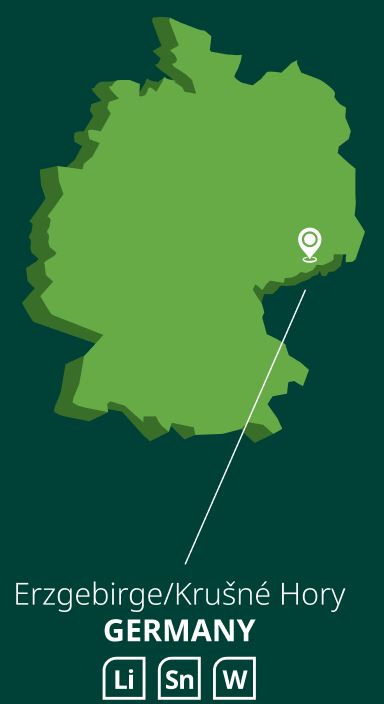
Erzgebirge/Krušné Hory, Germany–Czechia border

German–Czech border

Erzgebirge/Krušné Hory

Once famous for historic mining, the Erzgebirge/Krušné Hory region is now helping researchers look toward the future. Beneath this German–Czech border area, valuable resources such as lithium, tin and tungsten may still be hidden. DeepBEAT studies the region to better understand where these critical raw materials could be found.

Read moreShow less

The Erzgebirge/Krušné Hory region is a historic European mining district, well known for tin, tungsten and uranium, and increasingly important for lithium exploration. In DeepBEAT, the test site is used to study granite- and porphyry-related lithium, tin and tungsten mineral systems. These systems formed through deep geological processes, where granitic rocks and hot fluids altered the surrounding rocks and created mineralisation.

To investigate the area, the project combines historical exploration data with geology, geophysics, geochemistry, drill core studies, stream sediment sampling and plant geochemistry. These results will be integrated into 3D geological models and AI-based mineral prospectivity maps.

This makes Erzgebirge/Krušné Hory an excellent test site for showing how traditional geological knowledge and modern digital tools can work together to identify hidden lithium, tin and tungsten resources more effectively.

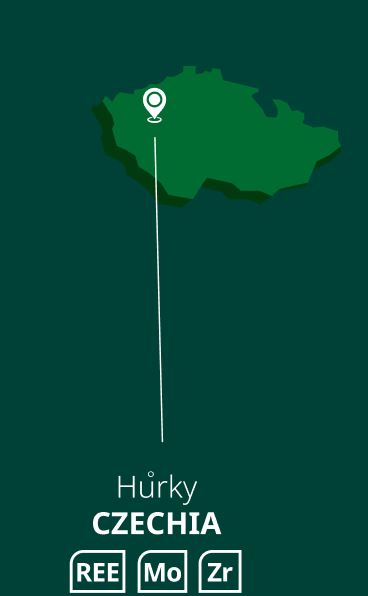
Hůrky, Czech Republic

Czech Republic

Hůrky

At the Hůrky test site in the Czech Republic, plants and soils may hold clues to valuable resources hidden underground. DeepBEAT studies these subtle surface signals to better understand where rare earth elements and other critical raw materials could be found, while testing cleaner, smarter and less invasive exploration methods.

Read moreShow less

The site focuses on a rare type of mineral system related to alkaline metasomatites, which can host rare earth elements, zirconium and molybdenum. These materials are linked to deep geological processes, where mineral-rich fluids moved through shear zones and altered the surrounding rocks. These processes can leave detectable chemical traces not only in rocks and soils, but also in vegetation.

In DeepBEAT, existing drill hole, geological, geochemical and geophysical data will be combined with new remote sensing results, soil sampling and plant geochemistry. The data will then be integrated into 3D geological, resource and mineral prospectivity models to better understand the known mineralisation and assess whether it may continue at depth.

This makes Hůrky an important reference site for testing practical, low-impact exploration approaches for rare earth element resources.